Drowning in Data
Modern microservices generate terabytes of logs daily. In a recent case study with the `dash-cart` service, we were dealing with 900,000+ log lines for a single incident.
Debugging meant scrolling through endless "INFO" messages to find the one "ERROR" that mattered. We needed a way to drain the noise without losing the signal.
Intelligent Drainer
Using the Drain3 algorithm, LogrCtx parses logs in real-time, extracting dynamic variables (timestamps, IDs) to identify static templates. This allows us to cluster millions of similar logs into a single representative pattern.
Live Reduction Demo
INTERACTIVERAG-Powered Insights
Reduction is just the first step. LogrCtx uses Retrieval-Augmented Generation (RAG) to understand the context of the reduced logs.
Context-Aware Summaries
Translates cryptic error codes into human-readable root cause analysis.
Comparative Analysis
Automatically compares logs between Canary and Stable deployments to detect regressions.
Distributed Streaming Architecture
Built to handle massive throughput. The system decouples ingestion from processing using a distributed message queue and pub/sub architecture.
RabbitMQ Task Queue
Handles backpressure by buffering incoming log streams before distributing them to worker nodes.
Elastic Worker Pool
Stateless worker nodes that scale horizontally to process log chunks in parallel using the Drain3 algorithm.
NATS Real-time Stream
Ultra-low latency pub/sub system that streams processed results back to the client via SSE.
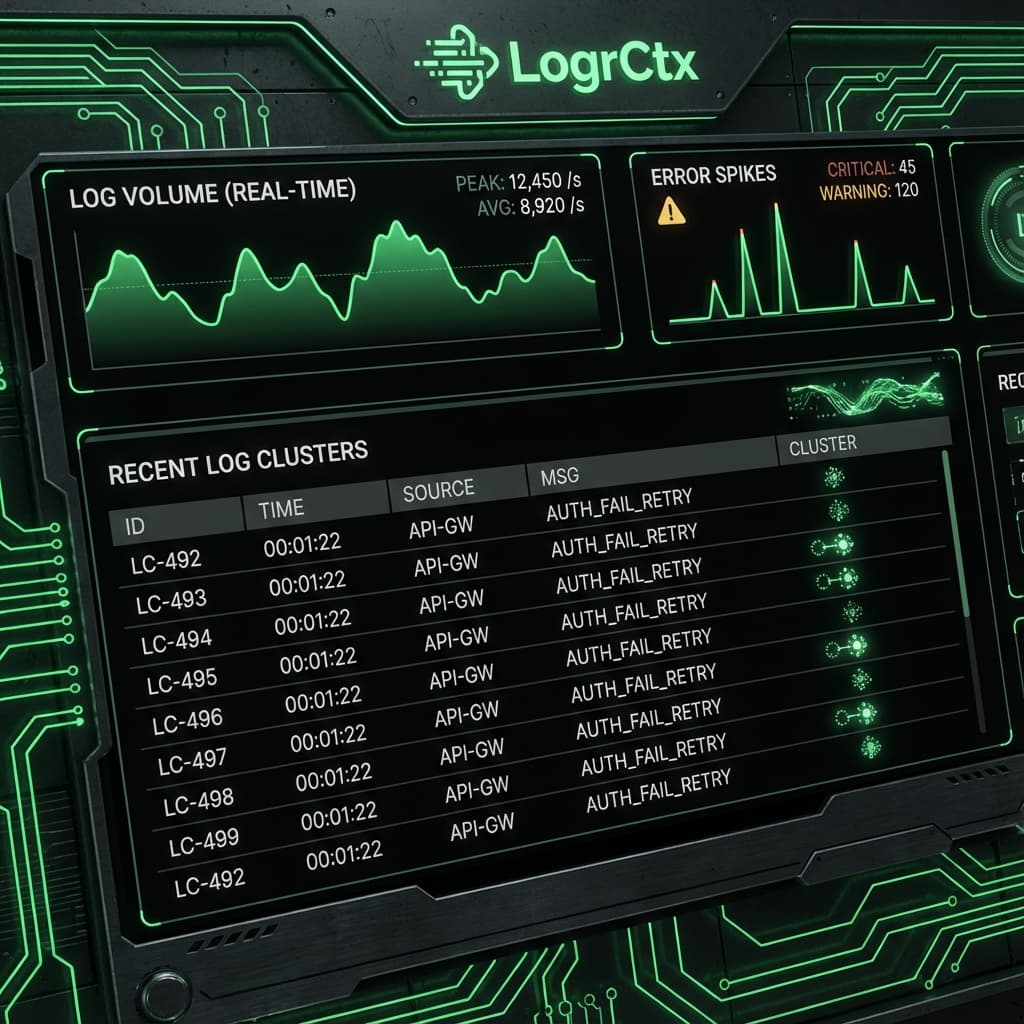
INTERFACE
THE_LENS
VISUALIZING THE
INVISIBLE
> Raw data is useless without insight. The LogrCtx frontend transforms abstract log streams into actionable intelligence using a high-performance React + AntD interface.
LOGQL_SUPPORT
Native support for complex queries to filter, aggregate, and analyze logs.
AUTO_RCA
One-click Root Cause Analysis tracing failures to the exact line of code.
PATTERN_ID
Visualizes log structures and templates for intuitive recognition.
IMPACT
OUTCOME
FROM PROTOTYPE TO
PRODUCTION SCALE
Condensed 900k+ daily log lines into < 1000 actionable patterns.
Drastic reduction in recovery time for DevOps teams during incidents.
Engineering convergence of infrastructure, AI, and frontend systems.
From Napkin to Node
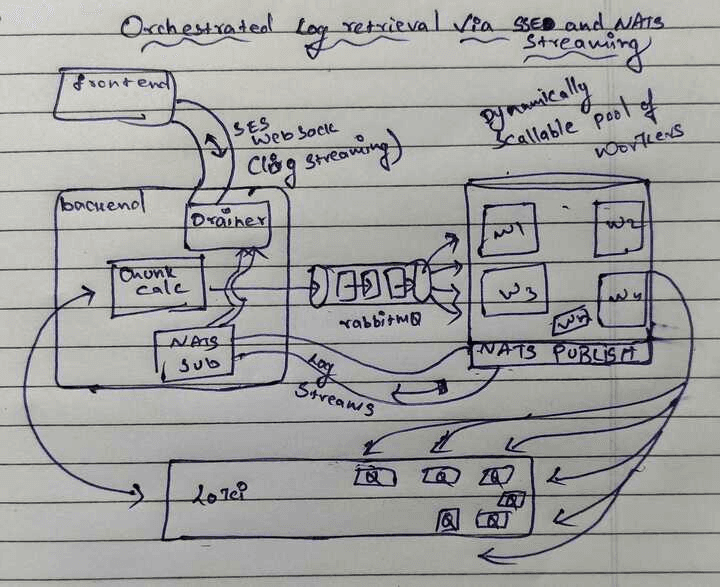
Fig 1.0: The initial handwritten design of the distributed worker system.
API-First Design
Authorization: Bearer <token>
Content-Type: application/json
LogrCtx exposes a full REST API, allowing developers to integrate log reduction directly into their CI/CD pipelines or custom dashboards.